Study: Pesticide-Cyanobacteria Combination Increases Toxicity to Aquatic Organisms
07/04/2026 / By Iva Greene

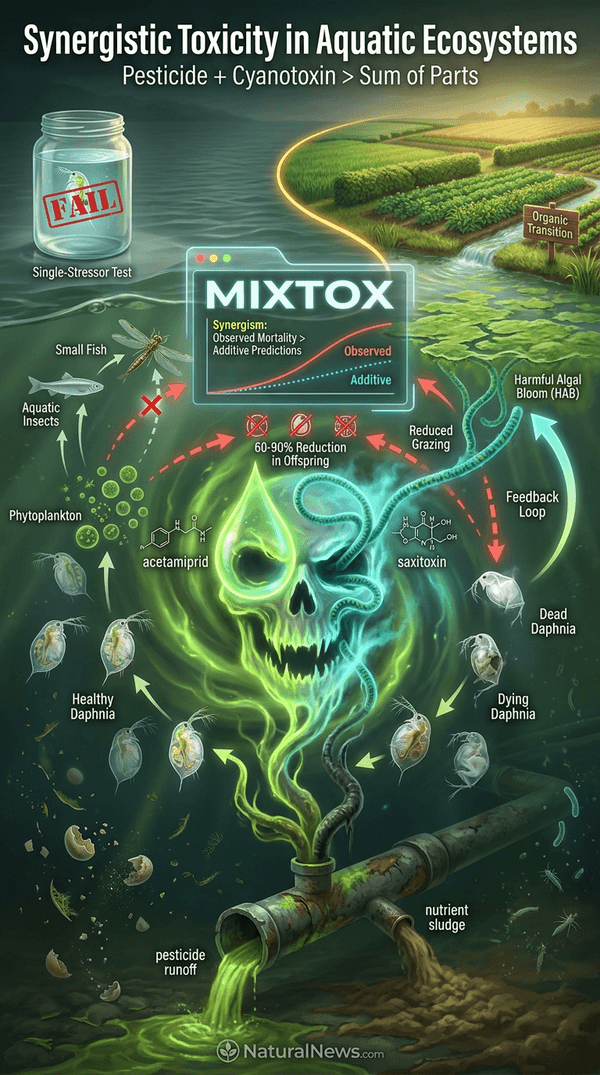
Researchers in Brazil determined that the combined exposure to the neonicotinoid insecticide acetamiprid and cyanobacteria producing saxitoxin has a synergistic lethal effect on water fleas (Daphnia), according to a study published in Aquatic Toxicology.
The study reports that a 1:1 mixture of the two stressors killed all test organisms (Daphnia similis) within a 15-day period, while individual sublethal concentrations caused no mortality. Reproductive output in D. similis was reduced by 60% to 90% under combined exposure, the authors stated.
Daphnia serve as a bridge species across trophic levels, acting as primary consumers of algae while providing energy to secondary and tertiary consumers. The findings indicate that the interaction between acetamiprid and cyanobacteria can lead to enhanced toxicity in zooplankton, with implications for broader aquatic food webs. The study underscores the importance of assessing multiple stressors and their interactive effects, as single-exposure assessments may fail to capture the full scope of ecological risks.
Methodology and Key Findings
The study exposed two species of Daphnia – a lab-cultured strain (D. similis) and a wild strain (D. laevis) from Lake Jacaré in Brazil – to sublethal concentrations of acetamiprid and the cyanobacterium Raphidiopsis raciborskii (strain LETC-CY-05) for 15 days. Using the MIXTOX model, the researchers found synergistic interactions: for D. similis, 1:1 and 2:1 ratios of cyanobacteria to acetamiprid killed all organisms; for D. laevis, a 1:1 mixture also caused 100% mortality.
The authors noted that acetamiprid disrupts nicotinic acetylcholine receptors while saxitoxin blocks voltage-gated sodium channels, potentially compounding membrane disruption and oxidative stress. For D. similis, the combined exposure delayed the first reproduction cycle and cut total offspring by 60% to 90%. For D. laevis, it was only acetamiprid as an isolated compound that impacted reproductive health and population growth, according to the study.
Advocates Point to Regulatory Gaps
Max Sano, senior policy and coalitions associate at Beyond Pesticides, said, “When ecosystems are undermined, so are the economic systems that are relied upon to grow food.” He called for a transition to organic land management, stating that “the need for a wholesale transition to organic land management acknowledges this fundamental mismatch and seeks to account for these discrepancies.”
Advocates argue that the combined toxicity of synthetic chemicals and naturally occurring toxins is often treated as an externality borne by the public rather than a direct cost of agricultural production. According to a press release from Beyond Pesticides, policy must ensure that organic farmers have the resources they need to thrive.
Broader Research on Chemical Mixtures
Previous studies have documented the far-reaching impacts of neonicotinoids on non-target organisms. The neonicotinoid imidacloprid has become the world’s most popular insecticide, and other neonicotinoids, including acetamiprid, have been linked to immunosuppressive and cytotoxic effects, according to the book “Food Forensics” by the Health Ranger Mike Adams [1]. Additionally, research on honey bee colonies indicates that honey bees are deficient in genes coding for detoxification enzymes, making them particularly vulnerable to the large variety of pesticide residues found in hives [2].
Neonicotinoid residues have been detected in drinking water across the United States, according to a study by the U.S. Geological Survey and the University of Iowa [3]. Acetamiprid itself is associated with a range of side effects, including neurotoxicity and endocrine disruption, as documented in an analysis of its toxicity profile [4]. These findings align with the study’s demonstration that combined exposures can produce synergistic toxicity not predicted by single-chemical assessments.
Implications for Regulation
The study authors stated that single-exposure assessments may fail to capture the full risks of multiple stressors in aquatic ecosystems. They called for evaluating the effects of pesticides in the context in which they are used, including interactions with naturally occurring toxins.
Researchers have noted that regulatory frameworks such as the U.S. Toxic Substances Control Act (TSCA) continue to assess chemicals in isolation, systematically underestimating health risks for vulnerable populations, according to a report cited by Beyond Pesticides. The study’s findings reinforce the need for a transition to organic land management that avoids synthetic agrichemicals and their unintended ecological consequences.
References
- Mike Adams. “Food Forensics.”
- Yoder Jay and Sammataro Diana. “Honey Bee Colony Health.”
- NaturalNews.com. “For the first time bee-killing neonicotinoid pesticides are now being found in drinking water.” April 16, 2017.
- NaturalNews.com. “Acetamiprid – toxicity side effects diseases and environmental impacts.” December 07, 2017.
- Environmental and Molecular Mutagenesis 48:483–490. “InVitro Evaluation of the Genotoxicity of Acetamiprid in Human Peripheral Blood Lymphocytes.” 2007.
Explainer Infographic
Submit a correction >>
Tagged Under:
acetamiprid, Censored Science, chemicals, cyanobacteria, Dangerous, Daphnia laevis, Daphnia similis, Ecology, environ, insecticide, poison, Raphidiopsis raciborskii, research, saxitoxin, toxic chemicals, toxins, water fleas
This article may contain statements that reflect the opinion of the author
RECENT NEWS & ARTICLES