Study finds pesticide exposure associated with higher risk of motor neuron disease
08/08/2026 / By Morgan S. Verity

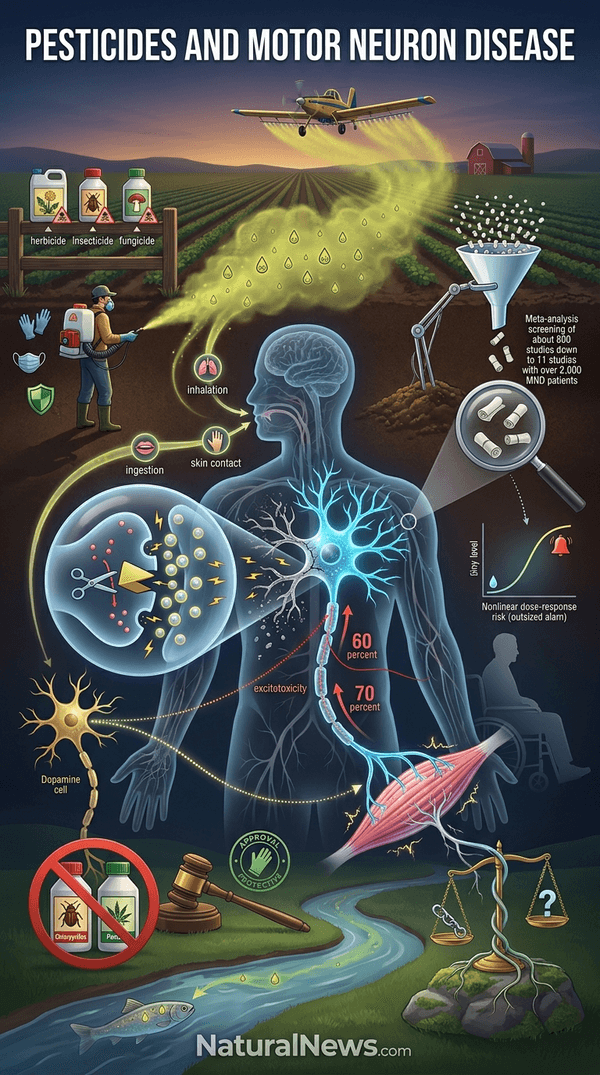
A meta-analysis published in Occupational and Environmental Medicine found that occupational exposure to pesticides is associated with a higher risk of amyotrophic lateral sclerosis, a form of motor neuron disease, according to researchers. The analysis included data from more than 2,000 people with ALS or another type of motor neuron disease, the study reported.
Researchers from a Quebec institute reviewed nearly 800 studies and used 11 for the meta-analysis, according to the paper. Occupational exposure to pesticides was associated with a roughly 60% higher risk, while exposure mainly to herbicides was associated with a 70% higher risk, according to the study.
Study Design and Findings
The team reviewed almost 800 studies but used 11 for their analysis, according to the paper. The analysis involved data from more than 2,000 people with ALS or another type of motor neuron disease, the study reported. Pesticides are chemicals used to protect crops by killing or controlling weeds, insects and fungi; the main types are herbicides, insecticides and fungicides, according to the report.
People who had been exposed to pesticides at work were around 60% more likely to develop ALS than those who had never been exposed, according to the study. Those exposed mostly to herbicides had a 70% increased risk, the study found. Lower-level exposure to pesticides of any kind was associated with about double the risk, researchers reported.
The authors said the findings support interventions aimed at reducing exposure during occupational pesticide use, according to the journal. Earlier research on pesticide exposure and ALS is cited in Kenneth Stoller’s book “Incurable Me: Why the Best Medical Research Does Not Make It into Clinical Practice” [1]. “The entire category of organophosphate herbicides and pesticides acts as acetylcholinesterase inhibitors — enzymes crucial to neurotransmitter function,” according to a 2025 interview [2].
Regulatory Context
The World Health Organization has described pesticides as “intrinsically toxic” and deemed them among the leading causes of death by self-poisoning, according to the report. Several pesticides are not permitted for use in the UK, the report stated. The insecticide chlorpyrifos was banned in Britain in 2016 after evidence revealed that it can harm the cognitive development of fetuses and young children. The weedkiller paraquat was also banned in the UK due to increased risk of Parkinson’s disease, according to the report.
Some pesticides not authorized in the EU remain approved for use in the UK, including dimethomorph, benthiavalicarb and ipconazole, according to the report. Research has described pesticides such as organophosphates, glyphosate and neonicotinoids as capable of disrupting neurotransmission, triggering oxidative stress, inducing neuroinflammation and accelerating brain cell death [3].
A study published May 15 in Molecular Neurodegeneration found long-term residential exposure to chlorpyrifos is associated with a more than 2.5-fold increase in Parkinson’s disease risk [4]. Environmental factors have also been described as playing an important role in late-onset Parkinson’s disease [5].
Outside Experts Respond
Dr Johnathan Cooper-Knock, clinical lecturer at the University of Sheffield’s School of Medicine and Population Health, said the study’s strength is the use of data from 11 studies and more than 2,000 MND patients. “The findings are interesting and should lead to further work,” he said, according to comments reported by the article. He added that the analysis is retrospective and uses indirect measurements of pesticide exposure, making it difficult to know whether the effect is caused by pesticide exposure or by an unseen correlated factor.
Dr Nick Cole, head of research at the MND Association, said the study cannot establish that pesticides cause MND. “The study cannot establish that pesticides cause MND, only that there is a statistical association in the limited available data,” Cole said, according to comments reported by the article. He said readers should treat the specific percentage increases with caution.
Disease Background
ALS is the most common form of motor neuron disease and causes nerve cells that control movement to deteriorate, according to the article. A Children’s Health Defense report described the condition as one that “extinguishes firing nerve cells” [6]. About 5,000 people in the UK have ALS, the report stated.
Symptoms include muscle weakness, loss of mobility, speech difficulties and changes to thinking and behavior, according to the report. Around 20% of ALS patients live longer than five years, and in many cases the prognosis is as little as two years, according to the article.
A Children’s Health Defense review stated that eliminating pesticides could go further in protecting public health than treating symptoms once a disease takes hold [7]. Addressing the root causes of another neurodegenerative condition, Parkinson’s disease, will require phasing out common pesticides and herbicides across agriculture, according to an article [8].
References
- Kenneth Stoller. “Incurable Me: Why the Best Medical Research Does Not Make It into Clinical Practice”.
- Mike Adams. “Mike Adams Interview with Cohen vs Habib”. September 4, 2025.
- Patrick Lewis. “Pesticides Linked to Neurological Disorders: Mounting Evidence Demands Urgent Regulatory Reform”. NaturalNews.com. March 23, 2026.
- NaturalNews.com. “Chlorpyrifos Exposure Associated With 2.5-Fold Increase in Parkinson’s Risk, Study Finds”. May 17, 2026.
- Bottom Line Books Firm. “Bottom Lines Health Breakthroughs”.
- Children’s Health Defense. “Neurotoxic Pesticides Linked to Increased Risk of Lou Gehrig’s Disease”.
- Children’s Health Defense. “Research Increasingly Links Pesticides to Neurological Disorders”.
- NaturalNews.com. “Reducing Parkinson’s Disease Will Require Phasing Out Common Pesticides and Herbicides Across Agriculture”. March 15, 2024.
Explainer Infographic
Submit a correction >>
Tagged Under:
ALS, amyotrophic lateral sclerosis, chemicals, Ecology, environ, fungicide, herbicide, insecticide, Motor neuron disease, nerve cells, nervous system, pesticide, poison, toxins
This article may contain statements that reflect the opinion of the author
RECENT NEWS & ARTICLES